


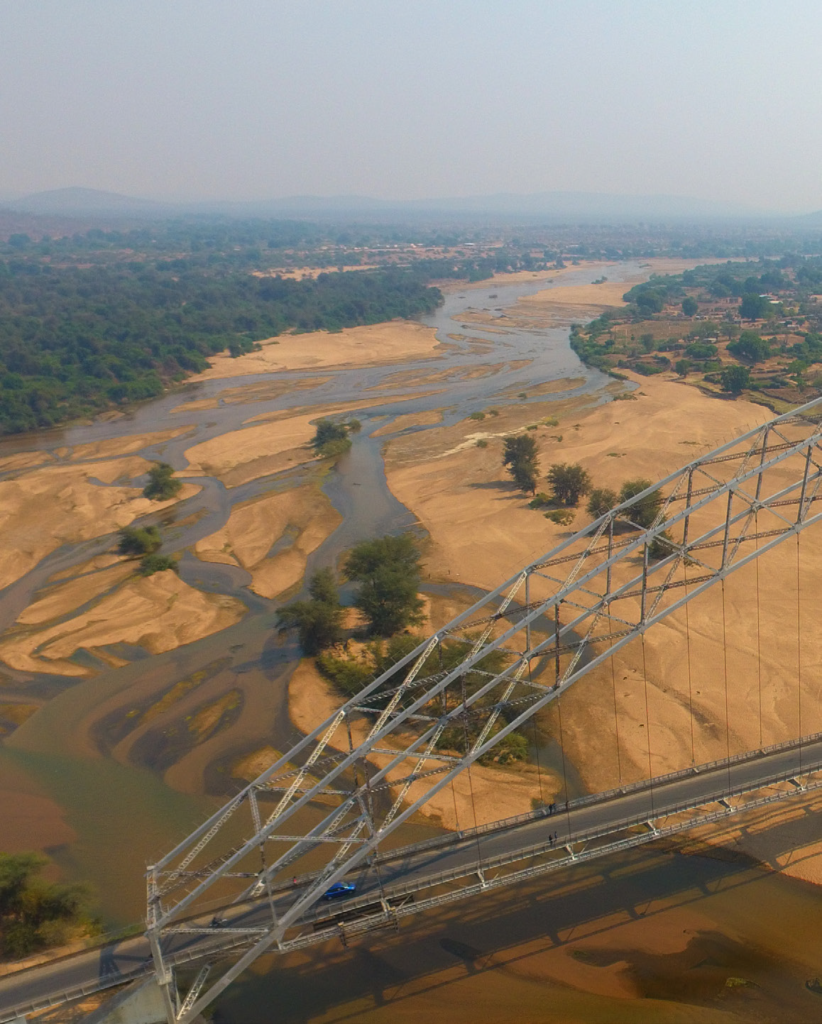
Riverine environments are a haven to a multitude of species. However, accumulation of sand due to erosion, poor catchment management practices, unsustainable mining activities and streambank cultivation have resulted in siltation of one of Zimbabwe’s main rivers called Save River. Not only is this aquatic body home to irrigation water for the South Eastern part of Zimbabwe, but it is even believed that even the Spirit Mediums drink from Save – “Mhondoro dzinomwa munaSave”. The old adage can no longer hold fort as siltation has reached fever pitch levels. The Birchenough Bridge which runs across Save River, is a tourist attraction located about 62 Kilometres from Mutare. If water levels in Save River dwindle, there is a possible knock on effect on the tourism potential of the bridge. The Save River needs urgent environmental protection in order for it to be restored to its original vibrant state.
A lot of livelihoods depend on Save River including irrigation schemes, fishmongers, aesthetic comfort and spiritual satisfaction. Perennial droughts induced by climate change have also been a cause for concern leading to the lack of adequate water levels in Save River. Water Stress at the Save River and across the country is not an isolated scenario, but a global concern which climate change experts and the protagonists of the Paris Agreement aim to arrest. Apart from water stress due to droughts, the emergence of siltation as a significant problem is a cause for concern.
Annually there is greater than 2 tonnes per hactre per year lost from agricultural fields in Sub-Saharan Africa due to poor soil and water management. Farmers should avoid carrying out cultivation along steep slopes and totally avoid streambank cultivation. The aforementioned are precursors of siltation. Furthermore, mining activities on the streambank should be prevented. It is an urgent call for all stakeholders to preserve Save River and ensure that it is protected from further siltation.