
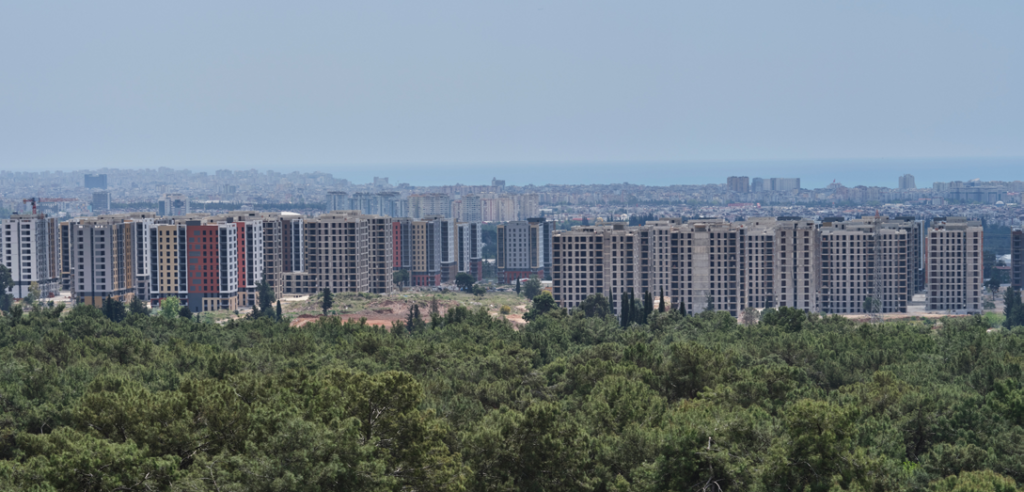
The increase in human population is putting an unprecedented pressure on the available natural resources. The population boom has led to an increased demand for food and space as consumption and habitation are now priorities. Vast tracts of state land, oceans and forests have become immediate victims. The need to use the resources is mostly unsustainable with high rates of pollution, release of greenhouse gases and the depletion of the ozone layer, resulting in climate change and ultimately acute food shortages.
In July, the Zimbabwe Statistics Agency (ZimStats) released the preliminary results of the national census which was held in April 2022. The report shows a population increase.
“Zimbabwean population now stands at 15,178,979 where 7,289,558 (48%) are male and 7,889,421 (52%) are female. The 2012 population census counted 13,061,329, giving an annual population growth rate of 1.5 percent,” notes the ZimStats report.
The 1.5 percent increase of the population per annum is also associated with increased demand for resources, depletion of forests and increased biodiversity loss. In Hwange, the environment has been greatly disturbed and damaged due to human activities.
Environmentalists concerned with the population growth say the population growth will sooner or later run up against the limits of the earth’s finite stock of resources.
“The inherent capacity of population to grow, exceeds the earth’s carrying capacity to yield increases in food, because of limits to the supply of cultivable land. This has resultantly led to depletion of resources and disruption of the natural ecosystems,” says Matthew Chisango, an environmentalist.
In many urban areas there is a lot of construction taking place. Sand poaching and destruction of land where sand is being illegally excavated is evident. In the quest of habitation, humans are also invading wetlands. Chisango added that, if population growth continues and people fail to sustain the environment, they will be the ultimate victims.
“Standards of living are becoming low amidst high quantities of pollution; this can result in drastic effects to the population in coming years. A related view is that some resources land, forests, fisheries though fixed, are renewable, but their sustainable yields have a maximum limit. Some harvests may exceed this maximum, but they lead to a permanent reduction in the long-run,” said Chisango.
Speaking to the Green Business Gazette, a social development researcher, Mary Kupinga argued that natural resources are not limited; and the increase in human population can be seen as an advantage to save the environment.
“That scarcity is revealed by prices; and that prices of resources are not rising. More people implies more ideas, more creative talent, more skills, and thus better technology; in the long run, population growth is not a problem but an opportunity,” said Kupinga.
Despite the arguments, most of the stakeholders on environment conservation say, population growth, along with increasing consumption, tend to increase emissions. The continued increase in population growth exposes the earth to climate change effects and burdens the natural resources.
“Cities use a large proportion of the world’s energy supply and are responsible for around 70 per cent of global energy-related greenhouse gas emissions which trap heat and result in the warming of the earth. There are many pressures caused by an increase in population, these include pressure on land, soil degradation, forests, habitat destruction, loss of biodiversity, changing consumption pattern, rising demand for energy, air pollution, global warming and water scarcity and pollution,” said Collet Hungwe, a Wildlife Conservation Activist.
The Intergovernmental Panel on Climate Change (IPCC) annotates that most of the warming of the past 50 years is attributable to human activities, particularly greenhouse gas emissions from high-income countries, and has acknowledged population growth as one of the major causes of emissions.
The boom in animal population has also caused serious challenges. With overpopulation in the wildlife habitations, animals are now migrating from their usual places invading human spaces in search of food resulting in human/wildlife conflicts. The Zimbabwe Wildlife Management and Parks Authorities announced that elephants in the Hwange National Park now exceeds 100 000, in a park with a holding capacity of 50 000. This has caused a lot of damage to the environment and threatening life for both animals and humans.
An environmentalist Winston Mudimba said rapid population growth causes increased inequities in agriculture, unemployment and underemployment, urbanization and climate change with adverse effects to the environment.
“Population growth is very costly on the environment. High population levels are contributing to the depletion of natural resources and causing widespread pollution,” said Mudimba.